Cracking the Code: What Casino Payout Numbers Actually Tell You
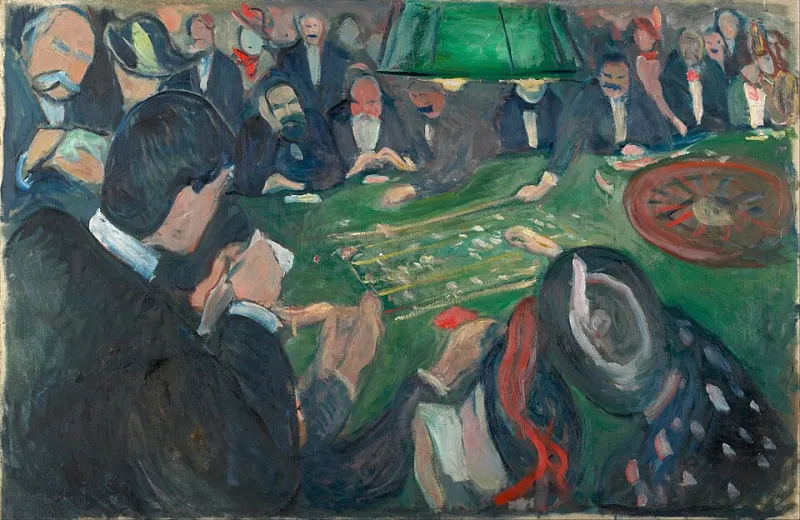
Photo: Edvard Munch, Public domain, via Wikimedia Commons
Walk into any casino — physical or digital — and you're surrounded by flashing lights, big jackpot promises, and games that look like pure fun. And they are fun. But underneath all that excitement is a layer of math that quietly shapes every outcome. The good news? Once you understand how that math works, you stop playing blind and start playing smart.
At BwinPH777, we believe that an informed player is a better player. So let's break down the numbers — no calculus degree required.
What Is the House Edge, and Why Should You Care?
The house edge is essentially the casino's built-in profit margin on any given game. It's expressed as a percentage and represents how much of every dollar wagered the casino expects to keep over the long run.
For example, if a game has a house edge of 5%, the casino expects to retain $5 for every $100 bet — on average, over thousands of spins or hands. That word average is key. In the short term, anything can happen. Players hit jackpots. Streaks occur. But the longer you play, the more the math asserts itself.
Here's a quick snapshot of typical house edges across popular casino games:
- Blackjack (basic strategy): ~0.5%
- Baccarat (banker bet): ~1.06%
- Roulette (American, double-zero): ~5.26%
- Slots: anywhere from 2% to 15%, depending on the game
- Keno: can exceed 25%
The takeaway? Not all games are created equal. Choosing a game with a lower house edge gives your bankroll more runway.
RTP: The Flip Side of the House Edge
RTP stands for Return to Player, and it's essentially the inverse of the house edge. If a slot machine has a 96% RTP, that means it's designed to pay back $96 for every $100 wagered over time. The remaining 4% is the house edge.
RTP is especially important when comparing online slots, since the numbers can vary wildly between titles. A game with a 94% RTP and one with a 97% RTP might look identical on the surface, but that 3% difference adds up significantly over extended play.
When you're browsing games at BwinPH777, look for RTP figures listed in the game info or paytable section. Reputable platforms publish these numbers, and they're worth checking before you commit your bankroll to a particular title.
Volatility: The Variable Nobody Talks About Enough
RTP tells you how much a game pays back. Volatility — sometimes called variance — tells you how it pays back.
Low volatility games pay out more frequently but in smaller amounts. Think of them as a steady drip. Great for players who want longer sessions without wild swings.
High volatility games pay out less often, but when they do, the rewards can be substantial. These are the games behind those massive jackpot stories you hear about — but they also come with longer dry spells.
Neither is inherently better. It depends entirely on your goals. If you're playing for entertainment and want your session to last, low volatility might be your friend. If you're chasing a big score and have the patience (and bankroll) to ride out the swings, high volatility opens the door to bigger paydays.
Reading a Paytable Like a Pro
Every casino game has a paytable, and most players skip right past it. That's a mistake.
For slots, the paytable shows what each symbol combination pays and explains bonus features. Compare the top prize multiplier to the minimum bet — this gives you a rough sense of the game's upside potential.
For table games, paytables reveal critical information like side bet payouts or blackjack payout ratios. Here's a real-world example: some blackjack tables pay 3:2 on a natural blackjack, while others pay 6:5. That seemingly small difference increases the house edge by about 1.4% — which is massive over time. Always choose the 3:2 table when you have the option.
For video poker, the paytable is everything. A "full pay" Jacks or Better machine returns about 99.5% with correct strategy. A slightly reduced paytable can drop that to 97% or lower. Same game, wildly different value.
Odds vs. Payouts: Knowing the Difference
Here's a concept that trips up a lot of players: the difference between the odds of winning and the payout offered.
In American roulette, there are 38 possible outcomes (numbers 1–36, plus 0 and 00). A straight-up bet on a single number pays 35:1. But the true odds of hitting that number are 37:1. That gap — between true odds and actual payout — is exactly where the house edge lives.
Understanding this concept helps you evaluate any bet more clearly. When the payout offered is close to the true odds, you're in better shape. When the gap is wide, you're giving up more value.
Putting It All Together
You don't need to be a statistician to use this information. You just need a few simple habits:
- Check the RTP before committing to a slot or video poker machine.
- Know the house edge of the table games you play.
- Match volatility to your bankroll — don't play high-variance games on a tight budget.
- Read the paytable every time, even for games you've played before.
- Compare blackjack payout ratios and always seek out 3:2 tables.
The math isn't your enemy — ignorance of the math is. When you understand the numbers, you can make choices that stretch your dollar further, pick games that suit your style, and walk away with a clearer picture of what each session actually cost or returned.
At BwinPH777, we want every player to feel confident at the virtual table. Bet bold, sure — but bet informed. That's where the real edge begins.