One Bad Beat, One Worse Decision: How Revenge Betting Quietly Empties Your Bankroll
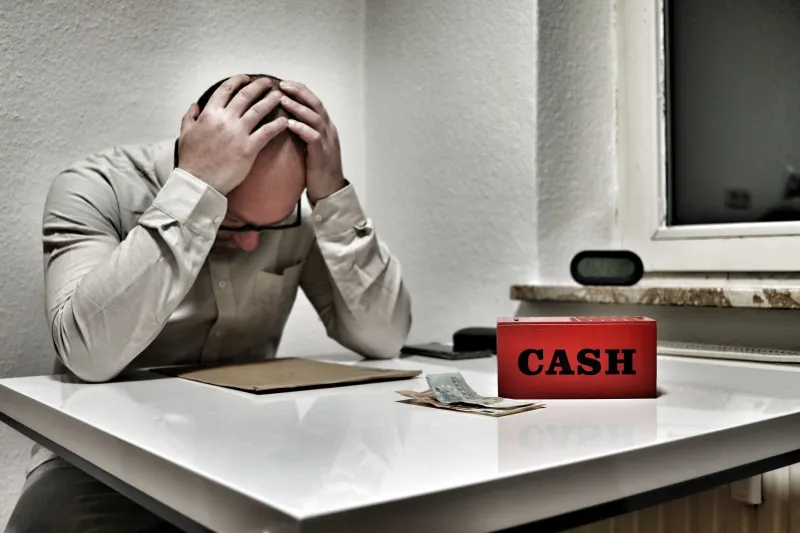
Losing a bet is part of the game. Every sharp bettor alive has taken a bad beat, watched a sure thing collapse in the fourth quarter, or had a parlay leg die on a last-second backdoor cover. It happens. The loss itself? That's just the cost of playing.
The real problem starts about five minutes after the loss — when your brain starts telling you that you can get it back.
That impulse has a name: revenge betting. And if you've ever doubled your next wager after a tough loss, jumped to a riskier game to recoup faster, or placed a bet you wouldn't have touched on a winning day, you already know what it feels like. What you might not know is exactly how much it's costing you.
What Revenge Betting Actually Looks Like
Revenge betting doesn't always announce itself. It rarely feels like a mistake in the moment — it feels like logic. Here's the thought pattern most bettors recognize:
You lose $50 on an NFL spread. You feel the sting. You tell yourself the next bet will "make it right." Maybe you bump to $100. Maybe you switch from a careful spread pick to a juicy moneyline underdog because the payout looks better. Maybe you start scanning for any live game that's currently in progress so you can get action going right now.
None of that is strategy. That's emotion wearing a strategy costume.
The escalation is the real trap. A $50 loss becomes a $100 bet, which becomes a $200 bet, and suddenly you're three bets deep trying to recover from a single bad line — and you're now in a hole that's four or five times deeper than where you started.
The Behavioral Economics Behind the Chase
There's actual science explaining why this happens, and it has nothing to do with being a bad bettor or a weak person. It's called loss aversion, and it's one of the most well-documented quirks of human decision-making.
Here's the short version: losses hurt roughly twice as much as equivalent gains feel good. Lose $100, and your brain registers it as significantly more painful than the pleasure of winning $100. That imbalance creates a psychological pressure to eliminate the loss immediately — not over time, not through disciplined play, but now.
Combine that with the concept of mental accounting — where bettors treat gambling money as a separate ledger they need to "balance" — and you've got a perfect storm. Your brain isn't just telling you to bet again. It's telling you that you owe yourself a win, that the universe has a debt to settle, that the next bet is somehow more likely to go your way because the last one didn't.
Spoiler: the sportsbook doesn't know about your mental ledger. The odds don't care that you lost last time.
A Real Scenario: The $50 That Became $400
Let's walk through how this plays out in practice.
Say you're watching Sunday afternoon NFL games. You've done your research, you like the Chiefs -3.5, and you put $50 on it. Kansas City leads at halftime, the second half falls apart, and you're down $50.
Instead of logging off and reviewing your process, you look for a late afternoon game. You haven't done the same research, but the Bengals +6.5 looks appealing — and hey, you can bet $100 to get back your $50 and be up $50. That bet loses too.
Now you're down $150. Sunday Night Football is starting. You don't really have a strong read on the game, but you throw $150 on it because that gets you back to even. Another loss.
You're now down $300 from a single $50 bet that didn't go your way. The math is brutal and it happens faster than most people expect.
The Shift to Riskier Bets: Why Underdogs Look Better After a Loss
One of the sneakier ways revenge betting shows up is in the type of bets people gravitate toward after a loss — not just the size. When you're down and trying to recover quickly, big favorites feel frustrating because you'd have to risk $200 to win $100. Your brain wants efficiency. It wants to recover fast.
So you start looking at underdogs, longer parlays, props with bigger payouts. The logic seems sound: "I need a big win to get back, so I need a big payout." But what you're actually doing is stacking low-probability bets on top of an already compromised emotional state. You're not betting smarter — you're betting more desperately.
The house doesn't mind at all.
How to Recognize the Cycle Before It Starts
Breaking the revenge betting habit starts with catching it early. Here are some concrete signals that you're slipping into the chase:
- You're placing a bet you wouldn't have made before the loss. If the game you're about to bet on wasn't on your radar an hour ago, ask yourself why it is now.
- You've increased your bet size without a strategic reason. Sizing up occasionally makes sense. Sizing up because you lost is a red flag.
- You feel urgency. Good bets don't have an expiration clock. If you feel like you need to act right now, that's emotion, not analysis.
- You're watching the clock instead of the lines. Checking when the next game starts so you can "get back in action" is a sign you're chasing, not betting.
Practical Strategies to Break the Pattern
Set a hard stop after consecutive losses. Decide in advance that two or three losses in a single session means you're done for the day. Not because you can't afford more, but because your judgment is likely compromised. This is a rule you make before you're emotional, so it holds up when you are.
Keep your unit sizes locked. One of the simplest safeguards is a strict flat-betting rule — every bet is the same size, period. It removes the temptation to size up after a loss entirely.
Write down why you're placing each bet. Sounds tedious, but even a quick note — "I like this line because the injury report favors the under" — forces you to engage your analytical brain instead of your emotional one. If you can't write a reason, you don't have one.
Build in a cool-down period. After a loss, give yourself at least 30 minutes before placing another bet. Go for a walk, grab food, do literally anything else. The urge to chase almost always fades with a little distance.
The Bottom Line
The original loss is almost never the real problem. It's the decisions that follow — the escalating bets, the riskier lines, the urgency to get even — that actually destroy bankrolls. Revenge betting feels like taking control of a bad situation. In reality, it's handing the sportsbook exactly what they're hoping for.
Bet bold when the research backs it. Play smart by knowing when to walk away. That's how you stay in the game long enough to actually win big.