Lucky Streak or Legit Edge? How Variance Is Quietly Sabotaging Your Betting Game

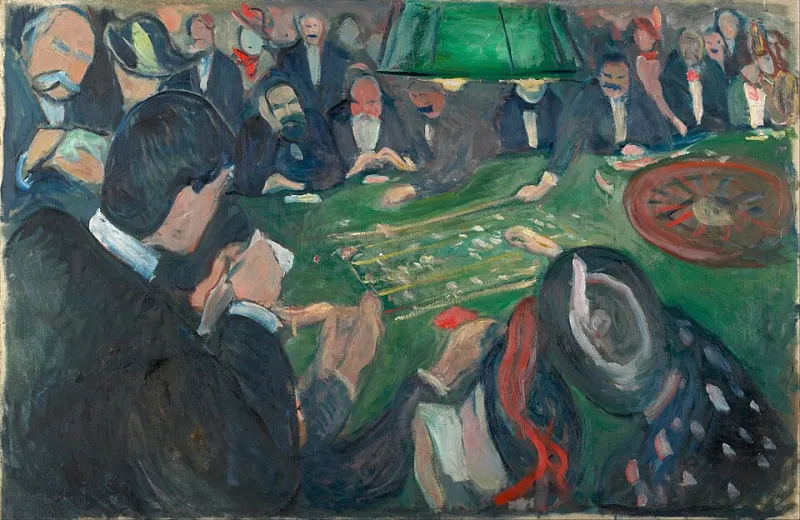
Photo: Matt Brown from London, England, CC BY 2.0, via Wikimedia Commons
Let's paint a picture. You hit four straight parlays over a weekend, you're up a few hundred bucks, and suddenly you're convinced you've cracked the code. You start betting bigger. You stop second-guessing your picks. Why wouldn't you? The results are right there.
Then the next two weeks happen.
This is the variance trap — and it catches sharp bettors, casual players, and everyone in between. At BwinPH777, we're all about playing smart, and playing smart means understanding one uncomfortable truth: short-term results are a terrible measure of long-term strategy.
What Variance Actually Means (In Plain English)
Variance is just a fancy word for the natural randomness baked into any gambling outcome. Even if you make a perfect bet — one with a genuine mathematical edge — you're not guaranteed to win it. Over thousands of bets, the edge plays out. Over twenty bets? You could run cold and look like a complete amateur, or run hot and look like a genius.
Think of it this way. Flip a fair coin 10 times and you might get 7 heads. That doesn't mean the coin is rigged toward heads. It means you ran a small sample. Betting works the same way, whether you're wagering on NFL spreads or spinning slots.
Volatility is the cousin of variance — it describes how wildly your results swing around your expected outcome. High-volatility bets (like long-shot parlays or high-variance slot machines) produce bigger swings. Low-volatility bets (like -110 point spreads on heavy favorites) tend to grind more predictably. Neither is inherently better, but knowing which you're playing changes how you should manage your money.
Expected Value: The Only Number That Actually Matters
Here's the concept that separates recreational bettors from serious ones: expected value (EV).
EV is the average outcome of a bet if you placed it thousands of times. A positive EV bet is one where, over a large sample, you'd come out ahead. A negative EV bet bleeds you slowly — or quickly.
Let's break it down simply. Say a sportsbook offers you +110 on a coin flip (you bet $100, win $110). The true odds are 50/50, but you're being paid better than even money. That's a +EV bet. Do it enough times and you profit.
Now flip it. You're getting -120 on that same coin flip. You're paying more than the fair price. That's -EV. Do it enough times and you lose, guaranteed.
The trap? You can make -EV bets and win in the short run. You can make +EV bets and lose in the short run. Variance doesn't care about your logic. It just does its thing.
Sample Size: Why Your Last 20 Bets Mean Almost Nothing
This is where most bettors get burned. They evaluate their strategy based on a week, maybe a month. That's not nearly enough data.
Statisticians will tell you that a meaningful sample in sports betting is somewhere north of 500 bets — some argue 1,000 or more before you can draw real conclusions about your edge. That sounds like a lot, and it is. But it's the reality of how randomness works.
Standard deviation is the tool that tells you how wide your results might swing before they settle around your true edge. If your expected win rate is 55% but your standard deviation is high, you might run at 45% for a few months before things normalize. That's not failure. That's variance.
The problem is that most people don't stick around long enough — or maintain discipline long enough — to let the sample size do its job. They either quit when variance beats them down, or they blow up their bankroll chasing losses.
The Emotional Hijack: How Good Luck Becomes Bad Decisions
Winning streaks are psychologically dangerous. When you're running hot, your brain starts attributing success to skill even when luck is the real driver. You start sizing up bets. You start ignoring your system. You start trusting your gut over your process.
This is called resulting — judging the quality of a decision by its outcome rather than the logic behind it. A bad bet that wins is still a bad bet. A good bet that loses is still a good bet. Outcomes and decision quality are not the same thing.
The flip side is just as dangerous. A cold streak can make you doubt a genuinely solid strategy. You start tweaking things that don't need tweaking. You abandon an approach that would've paid off if you'd just held steady.
Both reactions are emotional, and both are expensive.
How to Actually Trust Your System
So how do you stay grounded when variance is messing with your head? A few practical habits:
Track everything. Log every bet — the sport, the line, your reasoning, the result. Over time, patterns emerge that your memory would never catch.
Define your edge before you bet, not after. Know why a bet has value before you place it. If you can't articulate the edge, you don't have one.
Use flat betting or a consistent staking system. Varying your bet size based on how you feel is a variance amplifier. Keep it consistent and let the math do its work.
Set a review period, not a reaction period. Evaluate your strategy every 100 bets, not every 10. Give the sample room to breathe.
Separate the result from the process. After every session, ask yourself: did I follow my system? If yes, the results — good or bad — are acceptable. If no, that's what needs fixing.
The Bottom Line
Variance is not your enemy. It's just the weather — unpredictable in the short term, but patterned over time. The bettors who win consistently aren't the ones who got lucky last weekend. They're the ones who built a process, stuck to it through the ugly stretches, and let the math catch up to them.
At BwinPH777, we believe the boldest bet you can make is trusting your strategy when your results don't show it yet. That's not blind faith — that's smart play.