One Week, Twenty Bucks, Zero Excuses: What a Micro-Bankroll Taught Me About Betting Discipline
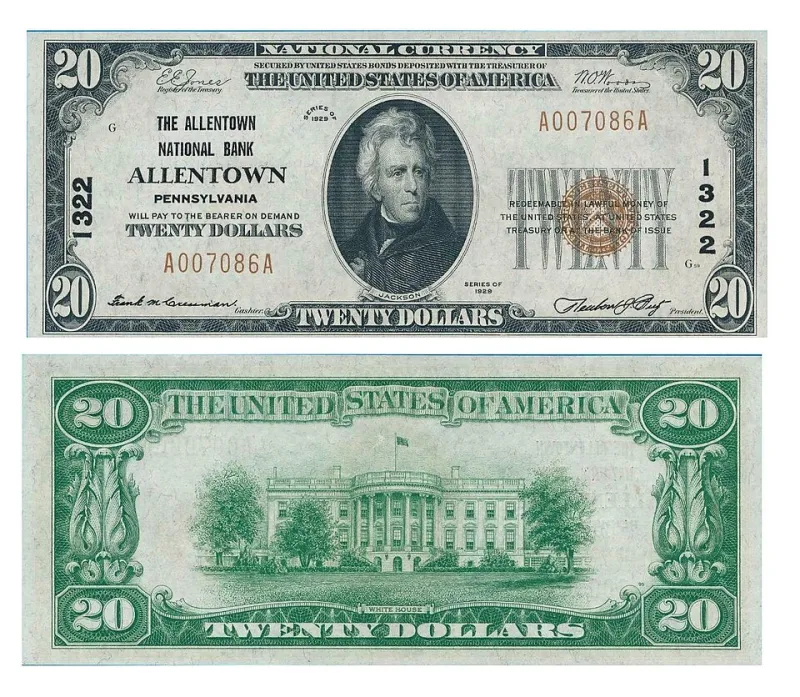
Photo: United States Treasury Department, Public domain, via Wikimedia Commons
Most bankroll advice is written for people with bankrolls. Set aside 2% per bet, the guides say — which is easy math when you've got $2,000. But most American bettors aren't managing four figures. They're throwing $20 on an app and calling it a weekend.
So I decided to write the guide from the other side. The rules: exactly $20 total, seven days, flat stakes only, every bet documented, every line shopped. Here's what a week of twenties actually looks like.
The Rules Before the Bets
Flat staking at this size means one thing: $1 to $2 per bet, no exceptions. That sounds absurd until you do the math — at $2 a bet, my bankroll could survive ten straight losses. That's the entire psychological advantage of the micro-bankroll. You cannot go broke in a day, so every decision has to be deliberate.
Rule two: every bet had to be priced at a minimum of two sportsbooks. Line shopping sounds like a professional's habit, but it matters more at small stakes, not less. When your whole bankroll is $20, a half-point of line value is a meaningful percentage of your edge.
Day by Day, Without the Drama
Day 1 — Monday: NBA total, $2. Shopped it across three books and found a full point of difference on the number. Took the better line. Loss. Bankroll: $18.
Day 2 — Tuesday: I almost bet a player prop I liked. Then I noticed it was priced identically everywhere, which usually means the market is efficient and there's no value. Passed. First lesson: not betting is a bet, and a micro-bankroll makes that visible in a way a big one doesn't.
Day 3 — Wednesday: NHL moneyline, $2. Win at +115. Bankroll: $20.30.
Day 4 — Thursday: The temptation day. Up slightly, feeling clever, I wanted to put $5 on a Thursday night football game. The rules said $2. I bet $2. This is the moment the experiment existed for — the bankroll didn't just constrain my losses, it constrained my mood. Win. Bankroll: $24.30.
Day 5 — Friday: Two small bets, $2 each, both shopped. One win, one loss. Net: +$0.40. Bankroll: $24.70.
Day 6 — Saturday: The busiest betting day of the week and the hardest test. College basketball slate, dozens of tempting numbers. I took two positions I'd actually identified reasons for, $2 apiece. Split. Bankroll: $24.70.
Day 7 — Sunday: One final bet, a loss. Final bankroll: $22.70. Up $2.70 on the week, or 13.5%.
What the Twenties Taught That Thousands Never Learn
Stake sizing is emotional armor. At $2 a bet, I never once felt the urge to chase. There was nothing to chase. Every high-roller leak — revenge betting, steaming, overbuilding parlays — is a stake-sizing problem wearing a psychology costume. The micro-bankroll removes the fuel.
Line shopping compounds. Across fourteen bets, I found a better price on nine of them. Most of those improvements were tiny — half a point, ten cents of juice. But they were free, and free edges are the only kind most bettors ever get.
Volume is a trap. With unlimited tempting games, the flat stake forced me to be selective. I bet fourteen times in a week instead of the forty I would've bet on vibes alone. Fewer bets, more thought per bet.
The percentage matters more than the dollar. A 13.5% weekly return on $20 is meaningless money and instructive process. Scaling that discipline is the whole game; scaling the dollars without the discipline is how bankrolls die.
Try It Before You Dismiss It
If you bet, do this experiment. Twenty dollars, flat stakes, one week, everything documented. You'll learn more about your own habits in seven days than a year of reading bankroll theory — because at twenty bucks, there's nowhere for bad habits to hide. Bet bold. Play smart. The order of those words is the whole lesson.